East Africa Safaris; the region is not simply a destination; it is a collection of extraordinary landscapes, wildlife encounters, ancient cultures, vibrant cities, mountain adventures and unforgettable journeys. From the mist-covered volcanic forests of Rwanda and Uganda to the endless savannahs of Tanzania and Kenya, an East Africa safari can be shaped around far more than traditional game viewing. You can trek through rainforest in search of endangered mountain gorillas, follow chimpanzees through ancient forests, search for golden monkeys, experience thrilling game drives, witness the Great Migration, explore Maasai communities, climb Mount Kilimanjaro, discover bustling African capitals and experience local cultures that give every journey its own character. Rwanda, Uganda, Tanzania and Kenya each offer a different way to experience the region, making an East African adventure ideal for travellers who want to go beyond the ordinary safari.
This comprehensive East Africa travel guide brings together some of the region’s most remarkable experiences, from gorilla trekking in Rwanda and primate tracking in Rwanda to Uganda gorilla trekking, wildlife safaris in Uganda, the Great Migration in Tanzania, the Kenya Great Migration, and iconic destinations including the Maasai Mara National Reserve, Serengeti National Park, Ngorongoro Conservation Area, Tarangire National Park, Amboseli National Park, Kilimanjaro National Park, Bwindi Impenetrable National Park, Mgahinga Gorilla National Park, Volcanoes National Park, Nyungwe National Park and Akagera National Park.
East Africa Safaris: Discover More Than the Traditional Safari
An East Africa safari can be as adventurous, immersive or relaxing as you want it to be. While classic game drives remain one of the best ways to explore the region’s savannah ecosystems, travellers today can combine wildlife viewing with primate trekking, mountain hiking, cultural experiences, conservation visits, city tours, community encounters and scenic journeys. Rwanda offers the possibility of combining a Kigali city tour, gorilla trekking and an Akagera safari within a relatively compact itinerary, while Uganda provides exceptional opportunities for gorilla and chimpanzee experiences alongside traditional game safaris. Tanzania is famous for its vast northern safari circuit, particularly the Serengeti, Ngorongoro and Tarangire, while Kenya combines the iconic Maasai Mara with destinations such as Amboseli and the wider Kenya safari circuit.
The appeal of East Africa lies in this diversity. A traveller can begin the morning watching mountain gorillas in a misty rainforest and, days later, be sitting in a safari vehicle watching elephants crossing an open plain. Another itinerary might combine the Great Migration with a Maasai cultural experience, while a more adventurous trip could connect gorilla trekking with Mount Kilimanjaro and a relaxing extension elsewhere in the region. Official tourism information from Rwanda, Uganda and Tanzania highlights wildlife, primate experiences, culture, hiking and nature as major components of the region’s tourism offering.
Gorilla Trekking in Rwanda: An Unforgettable Primate Adventure
Gorilla trekking in Rwanda is one of the world’s most remarkable wildlife experiences. The adventure takes place in Volcanoes National Park, part of the Virunga mountain ecosystem and home to endangered mountain gorillas. Rather than observing wildlife from a safari vehicle, travellers hike through montane rainforest and bamboo-covered slopes with expert guides and trackers to find habituated gorilla groups. The experience is intimate, physical and deeply connected to the forest environment. Rwanda’s official tourism information describes gorilla tracking as a carefully managed encounter, with visitors spending a limited period observing gorillas once the group has been located.
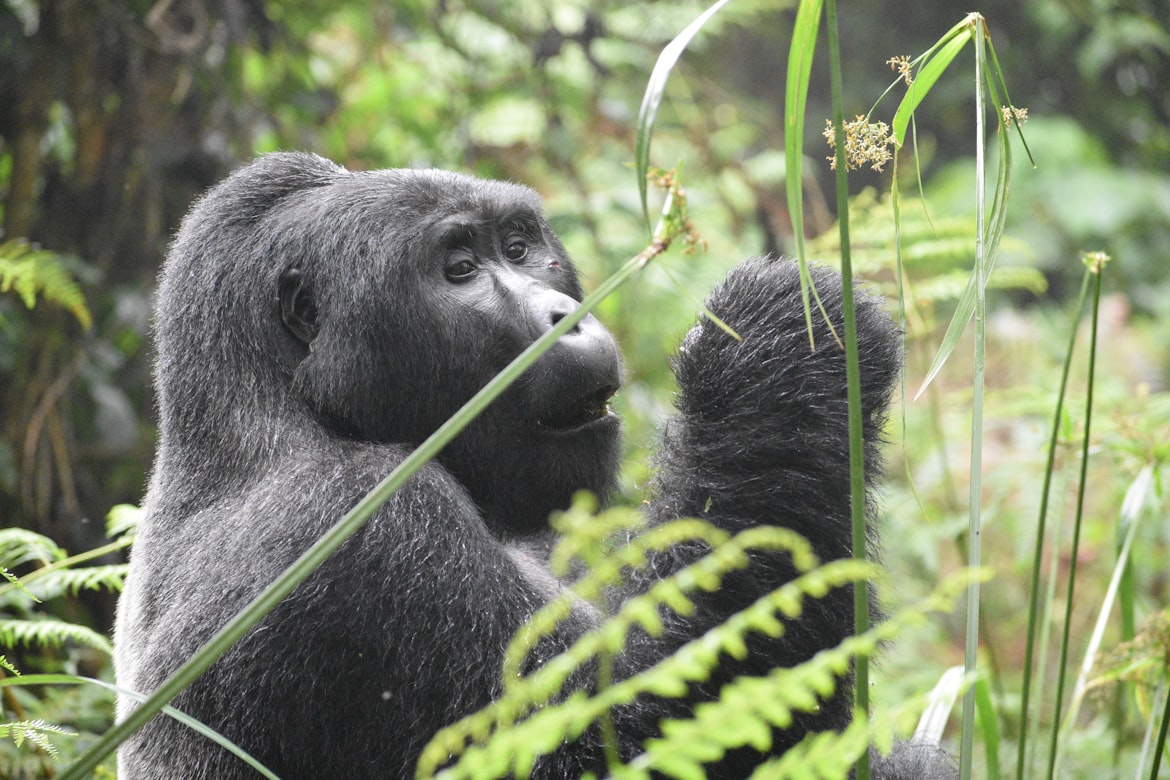
A Rwanda gorilla safari can also become much more than a single trekking experience. Volcanoes National Park provides opportunities for golden monkey trekking, hiking and cultural experiences, while nearby Musanze offers access to the volcanic landscapes of northern Rwanda. Travellers can combine Rwanda gorilla trekking with a Kigali city tour, Lake Kivu, Nyungwe chimpanzee trekking or a wildlife safari in Akagera National Park. This combination is one of the reasons Rwanda works particularly well for travellers who want to experience several different sides of East Africa without spending their entire holiday on long road transfers.
Primate Tracking in Rwanda: Gorillas, Golden Monkeys and Chimpanzees
Rwanda is sometimes associated almost exclusively with mountain gorillas, yet primate tracking in Rwanda reveals a much broader world of rainforest wildlife. The country is home to chimpanzees, golden monkeys, colobus monkeys, L’Hoest’s monkeys, blue monkeys, vervet monkeys and other primates. The Albertine Rift forests provide exceptional habitats for these species, making Rwanda an appealing destination for travellers who want a dedicated primate safari rather than a conventional Big Five itinerary.
Golden Monkey Trekking in Rwanda
Golden monkey trekking in Rwanda is one of the signature experiences of Volcanoes National Park. These striking primates live in the bamboo and montane forest of the Virunga landscape, and tracking them provides a very different experience from gorilla trekking. Golden monkeys are energetic, social and often active in vegetation, making the experience particularly rewarding for wildlife photographers and nature enthusiasts. Rwanda’s tourism authority identifies golden monkey tracking in Volcanoes National Park as a standalone experience that can be combined with gorilla trekking.
Chimpanzee Trekking in Rwanda
For travellers interested in chimpanzee trekking in Rwanda, Nyungwe National Park is an essential destination. This ancient rainforest is known for its chimpanzee population and remarkable primate diversity. Chimpanzee tracking usually begins early in the morning and involves walking through forest terrain in search of habituated communities. The experience can be more unpredictable than a conventional safari because chimpanzees move through the forest, forage and communicate across the canopy. Rwanda’s official tourism information notes that chimpanzee tracking takes place in Nyungwe and can also involve Gishwati Forest.
Game Drives in Akagera National Park: Rwanda’s Classic Safari Experience
If gorilla trekking represents Rwanda’s rainforest adventure, game drives in Akagera National Park provide the country’s classic savannah safari experience. Located in eastern Rwanda, Akagera features savannah, woodland, wetlands and lakes, creating a striking contrast with the mountainous landscapes of Volcanoes and the rainforest of Nyungwe. The park has become an important destination for wildlife safaris in Rwanda and is home to the Big Five, giving travellers the opportunity to experience traditional African game viewing without leaving the country.
A Rwanda safari can therefore include lions, elephants, buffaloes, leopards and rhinoceros alongside giraffes, zebras, antelopes, hippos, crocodiles and numerous bird species. Morning and afternoon game drives allow visitors to explore different areas of the park, while boat experiences on the park’s lakes can provide another perspective on wildlife and wetland ecosystems. For travellers building a multi-experience East Africa itinerary, Akagera can be paired with gorilla trekking to create a powerful combination of rainforest primates and savannah wildlife.
Safaris in Rwanda: Combining Gorilla Trekking and Wildlife
Safaris in Rwanda are increasingly attractive to travellers who want variety in a relatively compact destination. A well-designed Rwanda safari itinerary can connect Kigali with Akagera National Park, Volcanoes National Park and Nyungwe National Park, creating a journey that includes Big Five wildlife, mountain gorillas, chimpanzees, golden monkeys, rainforest landscapes, cultural experiences and city exploration. Rwanda’s tourism platform itself promotes itineraries combining safari, gorilla tracking, primate tracking and Lake Kivu.
The country’s diversity also makes it possible to tailor a Rwanda wildlife safari to different travel styles. Wildlife photographers may focus on Akagera and Nyungwe, primate enthusiasts can build an itinerary around gorilla and chimpanzee tracking, adventure travellers can add volcano hikes, and first-time visitors can combine Kigali, gorilla trekking and a classic safari. The result is a destination that challenges the idea that an African safari must mean spending every day in a 4×4 vehicle.
Uganda Gorilla Trekking: Bwindi and Mgahinga
Uganda gorilla trekking offers another extraordinary opportunity to encounter endangered mountain gorillas in their natural habitat. The country’s two principal gorilla trekking destinations are Bwindi Impenetrable National Park and Mgahinga Gorilla National Park. Bwindi is particularly famous for its ancient rainforest and mountain gorilla experiences, while Mgahinga forms part of the wider Virunga landscape shared across Uganda, Rwanda and the Democratic Republic of Congo. Uganda Tourism Board identifies mountain gorilla trekking in Bwindi as one of the country’s premier tourism experiences.
Bwindi Impenetrable National Park
Bwindi National Park, formally known as Bwindi Impenetrable National Park, is a spectacular rainforest destination in southwestern Uganda. Its steep terrain, dense vegetation and extraordinary biodiversity make gorilla trekking here a genuine forest expedition. Travellers can combine gorilla tracking with cultural experiences, birdwatching and other wildlife activities, making Bwindi an important component of a broader Uganda safari.
Mgahinga Gorilla National Park
Mgahinga Gorilla National Park sits within Uganda’s portion of the Virunga volcanic landscape and offers a combination of gorilla trekking, golden monkey tracking and mountain scenery. The destination is especially appealing to travellers who want to experience the wider Virunga ecosystem while exploring Uganda. Its volcanic setting creates a dramatic backdrop for trekking and provides an opportunity to experience one of East Africa’s most important mountain landscapes.
Wildlife Safaris in Uganda and Game Safaris in Uganda
Beyond gorillas, wildlife safaris in Uganda offer a diverse selection of ecosystems and wildlife experiences. Uganda’s nickname, the Pearl of Africa, reflects the country’s combination of forests, lakes, rivers, savannahs and mountains. A game safari in Uganda can include traditional game drives, boat safaris, chimpanzee tracking, birdwatching and primate encounters, allowing travellers to experience a broader range of wildlife than they might expect from a single destination.
Uganda is particularly attractive to travellers who want to combine primate tourism with classic African wildlife. A longer itinerary might connect Bwindi or Mgahinga with Queen Elizabeth National Park, Murchison Falls National Park or other safari destinations, creating a journey that combines gorillas, chimpanzees, elephants, lions, hippos and abundant birdlife. Uganda Tourism Board positions gorilla trekking, wildlife and adventure experiences among the country’s leading tourism attractions.
Great Migration in Tanzania: The Serengeti Spectacle
Few wildlife experiences compare with the Great Migration in Tanzania. Every year, enormous herds of wildebeest and zebra move across the Serengeti ecosystem in search of fresh grazing and water. The movement is not a single event confined to one location or one day; it is a continuous natural cycle that changes throughout the year. Tanzania’s official tourism information describes Serengeti National Park as being renowned for the annual migration of wildebeest and zebra.
A Tanzania Great Migration safari can include dramatic predator encounters, enormous herds, river crossings and vast grassland landscapes. However, travellers should understand that wildlife movements depend on rainfall, grazing conditions and seasonal patterns, so the location of the herds cannot be guaranteed on a particular day. The best approach is to design the itinerary around the broader ecosystem rather than treating the migration as a single scheduled attraction.
Serengeti National Park: The Heart of Tanzania Safari
Serengeti National Park is one of Africa’s most iconic safari destinations and a cornerstone of the northern Tanzania safari circuit. The park’s vast plains support huge concentrations of herbivores and predators, making it possible to experience classic African game viewing alongside the spectacle of the Great Migration. The Tanzania Tourist Board highlights the Serengeti’s expansive landscapes, migrating wildebeest and zebra, predators and diverse wildlife as defining features of the destination.
A Serengeti safari can include early morning game drives, afternoon wildlife viewing, photography and, depending on the itinerary and operator, additional experiences such as balloon safaris. The scale of the Serengeti is one of its greatest attractions: instead of feeling like a small wildlife reserve, it provides a sense of entering an enormous living ecosystem.
Ngorongoro National Park: Exploring the Ngorongoro Crater
The destination commonly searched for as Ngorongoro National Park is more accurately known as the Ngorongoro Conservation Area, with the Ngorongoro Crater being its most famous attraction. It is one of Tanzania’s most extraordinary wildlife landscapes and an essential stop on the northern safari circuit. Travellers descend into the crater for game drives surrounded by spectacular volcanic scenery, with opportunities to encounter a wide range of wildlife.
The Ngorongoro experience works especially well alongside Serengeti National Park because the two destinations provide contrasting safari environments. The crater offers a concentrated wildlife landscape, while Serengeti provides enormous open plains and the broader migration ecosystem. Tanzania’s tourism information features Ngorongoro alongside Serengeti and Tarangire as major components of the country’s northern safari circuit.
Tarangire National Park: Elephants, Baobabs and Classic Game Drives
Tarangire National Park is another essential stop for travellers exploring northern Tanzania. Famous for its elephants and distinctive baobab landscapes, Tarangire offers a classic game-drive experience with opportunities to see elephants, lions, giraffes, zebras, antelopes and abundant birdlife. Tanzania’s official tourism resources specifically highlight Tarangire’s elephant herds and baobab scenery.
A Tarangire safari can be included before or after Serengeti and Ngorongoro, creating a well-rounded northern Tanzania itinerary. Its landscapes also provide excellent photographic opportunities, particularly when elephants are framed against enormous baobab trees or when wildlife gathers around water sources.
Kenya Great Migration: Maasai Mara National Reserve
The Kenya Great Migration is closely associated with the Maasai Mara National Reserve, one of Kenya’s most celebrated wildlife destinations. The Mara forms part of the wider Serengeti-Mara ecosystem, meaning wildlife movements cross national borders as animals follow seasonal grazing and water. For many travellers, witnessing the migration in the Maasai Mara represents the quintessential Kenya safari experience.
The Maasai Mara National Reserve is not only about the migration. It is a superb year-round wildlife destination, with opportunities to encounter lions, leopards, cheetahs, elephants, buffaloes, giraffes, zebras and many other species. Combining the Mara with cultural experiences and other Kenyan destinations can transform a migration-focused trip into a much broader exploration of Kenya.
Amboseli National Park: Elephants Beneath Mount Kilimanjaro
Amboseli National Park provides one of East Africa’s most recognizable safari landscapes: elephants moving across open plains with Mount Kilimanjaro rising dramatically in the distance. The park is a natural choice for photographers, wildlife enthusiasts and travellers who want to combine Kenya safari experiences with iconic mountain scenery.
An Amboseli safari can be combined with the Maasai Mara, creating a Kenya itinerary that includes two very different ecosystems. While the Mara is famous for its expansive grasslands and migration wildlife, Amboseli is particularly known for its elephants, wetlands and spectacular views toward Kilimanjaro.
Kilimanjaro National Park: Mountain Adventure in Tanzania
For travellers looking beyond wildlife, Kilimanjaro National Park offers an entirely different East African adventure. Mount Kilimanjaro is Africa’s highest mountain, and trekking routes lead through multiple ecological zones before reaching the high-altitude summit environment. A Kilimanjaro climbing itinerary can be combined with a Tanzania safari, allowing travellers to experience both the mountain and the country’s legendary wildlife destinations.
This combination is particularly appealing to active travellers who want more than a traditional game drive. Imagine beginning with a mountain trek, then travelling into the northern safari circuit for Tarangire, Ngorongoro and Serengeti. Tanzania’s official tourism website promotes hiking Mount Kilimanjaro alongside wildlife safari and cultural experiences, reinforcing the country’s broad range of adventure possibilities.
Cultural Experiences in East Africa: Meet the People Behind the Destinations
Wildlife is only one part of the East African experience. Cultural experiences in Rwanda, Uganda, Kenya and Tanzania can add depth and meaning to a safari by creating opportunities to learn about local communities, traditions, food, music, crafts, history and everyday life. A responsible cultural experience should prioritize genuine interaction, respect local customs and ensure that communities benefit from tourism.
In Rwanda, travellers can combine wildlife adventures with Kigali city tours, village experiences, coffee visits and cultural activities. Tanzania offers opportunities to learn about Maasai culture and other local traditions, while Kenya’s safari destinations can be paired with community-based experiences. Uganda also offers cultural encounters across different regions and communities. Tanzania’s official tourism resources specifically highlight cultural experiences, traditions, music, dance, art and local lifestyles as part of the country’s tourism offering.
Kigali City Tours: Experience Rwanda Beyond the National Parks
A Kigali city tour is an excellent way to begin or finish a Rwanda safari. Kigali is known for its green streets, contemporary development, restaurants, markets, galleries and cultural attractions. Exploring the city provides context for the country’s history, transformation and modern identity before travelling into the national parks.
A Kigali itinerary can include cultural sites, local markets, art spaces, coffee experiences, restaurants and opportunities to interact with the city’s contemporary creative scene. For travellers arriving for gorilla trekking, even one or two days in Kigali can turn a wildlife-focused holiday into a more complete Rwanda travel experience.
City Tours, Nature and Adventure: Discover East Africa Differently
One of the biggest advantages of travelling across East Africa is the ability to combine seemingly different experiences in one journey. A traveller might begin with a Kigali city tour, travel north for gorilla trekking in Rwanda, continue south for chimpanzee trekking in Nyungwe, and then finish with game drives in Akagera National Park. Another traveller might choose Uganda gorilla trekking, followed by a Uganda wildlife safari and cultural experiences before continuing into Kenya or Tanzania.
For a classic multi-country East Africa itinerary, Rwanda and Uganda can provide the primate experience while Kenya and Tanzania deliver the great migration and savannah safari experience. This makes the region particularly suitable for travellers who do not want to choose between gorillas, chimpanzees, elephants, lions, migration wildlife, mountains, culture and cities.
The Ultimate East Africa Safari: Rwanda, Uganda, Kenya and Tanzania
A truly comprehensive East Africa safari itinerary can connect the region’s greatest experiences. Rwanda can provide mountain gorilla trekking, golden monkey tracking, chimpanzee trekking and Akagera game drives. Uganda can add Bwindi, Mgahinga and wider wildlife safari experiences. Kenya can introduce the Maasai Mara and Amboseli, while Tanzania can complete the adventure with Serengeti, Ngorongoro, Tarangire and Kilimanjaro.
The ideal itinerary depends on the season, available time, budget, interests and preferred travel style. Travellers focused on gorillas may spend more time in Rwanda and Uganda. Those interested in the Great Migration may prioritize Kenya and Tanzania. Adventure travellers may combine Kilimanjaro with safari, while photographers may prefer longer stays in the Serengeti, Maasai Mara, Akagera or Amboseli. The key is to build the trip around experiences rather than simply collecting destinations.
When to Plan Your East Africa Wildlife Safari
There is no single perfect time for every East African destination because different ecosystems have different seasonal patterns. The best time for gorilla trekking in Rwanda and Uganda can differ from the ideal period for the Great Migration in Tanzania and Kenya, while mountain climbing and general wildlife viewing also have their own considerations.
Migration-focused travellers should plan around the movements they most want to see rather than assuming that the herds will be in one fixed location. Gorilla trekkers should consider trekking conditions, availability and permit planning. Safari travellers should consider rainfall, wildlife concentrations, road conditions, photography conditions and accommodation availability. Because conditions can vary, working with a knowledgeable local safari operator can help match the itinerary to the traveler’s priorities.
Responsible Tourism and Conservation in East Africa
Responsible tourism should be at the heart of every East Africa wildlife safari. Gorilla and primate experiences are carefully managed because visitors are entering sensitive habitats and observing endangered species. Rwanda’s tourism authorities emphasize controlled gorilla encounters, professional trackers and responsible tourism practices.
Travellers can contribute by choosing licensed operators, respecting park rules, following guide instructions, maintaining appropriate distances from wildlife, avoiding single-use plastics where possible and supporting locally owned businesses and community initiatives. Responsible travel is not simply about protecting wildlife; it is also about ensuring that tourism creates meaningful benefits for communities living around national parks and conservation areas.
Why Discover East Africa Differently?
To discover East Africa differently is to understand that the region cannot be reduced to one safari, one national park or one wildlife encounter. It is the mist rising over the Virunga volcanoes, the sound of chimpanzees calling through Nyungwe Forest, golden monkeys moving through bamboo, elephants crossing Akagera, gorillas resting in the rainforest, lions watching the Serengeti plains, wildebeest moving across the Great Migration, Maasai culture in the Mara ecosystem, elephants beneath Kilimanjaro and vibrant city life in Kigali.
East Africa offers an extraordinary combination of wildlife, adventure, culture, conservation and human connection. Whether your dream is Rwanda gorilla trekking, Uganda gorilla trekking, chimpanzee trekking, golden monkey trekking, wildlife safaris in Uganda, game drives in Akagera, the Great Migration in Tanzania, the Kenya Great Migration, a Maasai Mara safari, a Serengeti safari, Ngorongoro Crater, Tarangire National Park, Amboseli National Park, Kilimanjaro National Park, or a multi-country East Africa safari combining them all, the region offers countless ways to create a journey that feels personal rather than predictable.